Estepona, Costa del Sol · 2024
Microcement Living-Dining Room
Project Overview
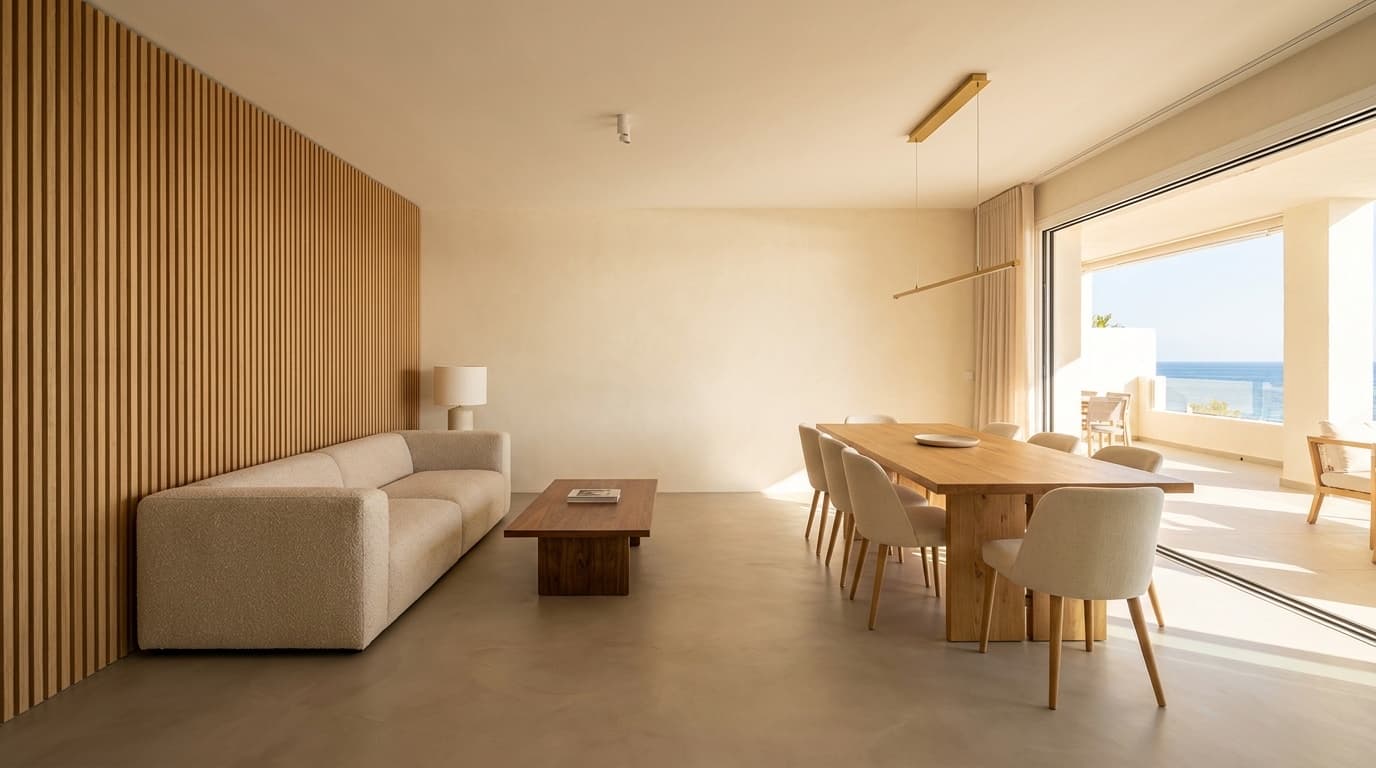
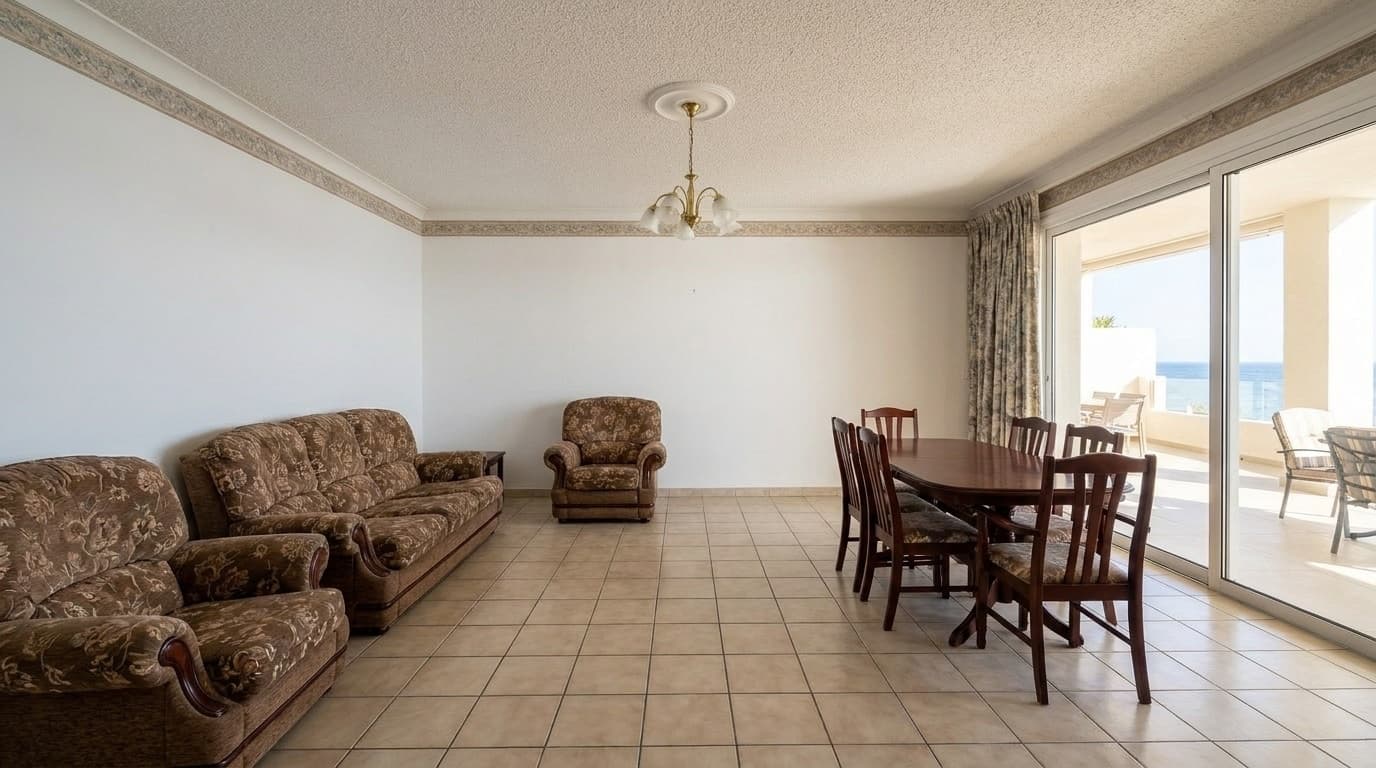
A 65 m² living-dining room in an Estepona apartment transformed into a warm, contemporary Mediterranean space. The original room had dated 33×33 cm beige tile flooring, a popcorn-textured ceiling, a wallpaper border at picture-rail height, and dark mahogany furniture that absorbed every bit of light. We laid a continuous warm-grey microcement floor with no joints, built a floor-to-ceiling oak slat feature wall behind the seating area with integrated wall-washing LED lighting, smoothed the ceiling and refinished all walls in soft cream lime-plaster, and replaced the old aluminium sliding doors with a wider modern unit opening to the terrace. The result is a calm, tactile space — wood, plaster and microcement with no marble in sight.
Client Brief & Initial Assessment
The owners — a young couple from Madrid using the Estepona apartment as a second home and occasional rental — wanted a complete reset of the main living area without changing the apartment's footprint. They were specific about two things: no marble (they had it in their Madrid flat and felt it was overused on the Costa del Sol) and a continuous, calm floor that connected the living and dining zones into one space. They liked tactile, slightly imperfect surfaces — natural wood, plaster, microcement — and asked us to avoid anything that looked too polished or hotel-like. After the site visit, our project manager confirmed the room was structurally simple (no walls to remove) but needed full surface treatment: every wall, the ceiling, the floor and the openings.
Technical Specifications
Material Selection at the Showroom
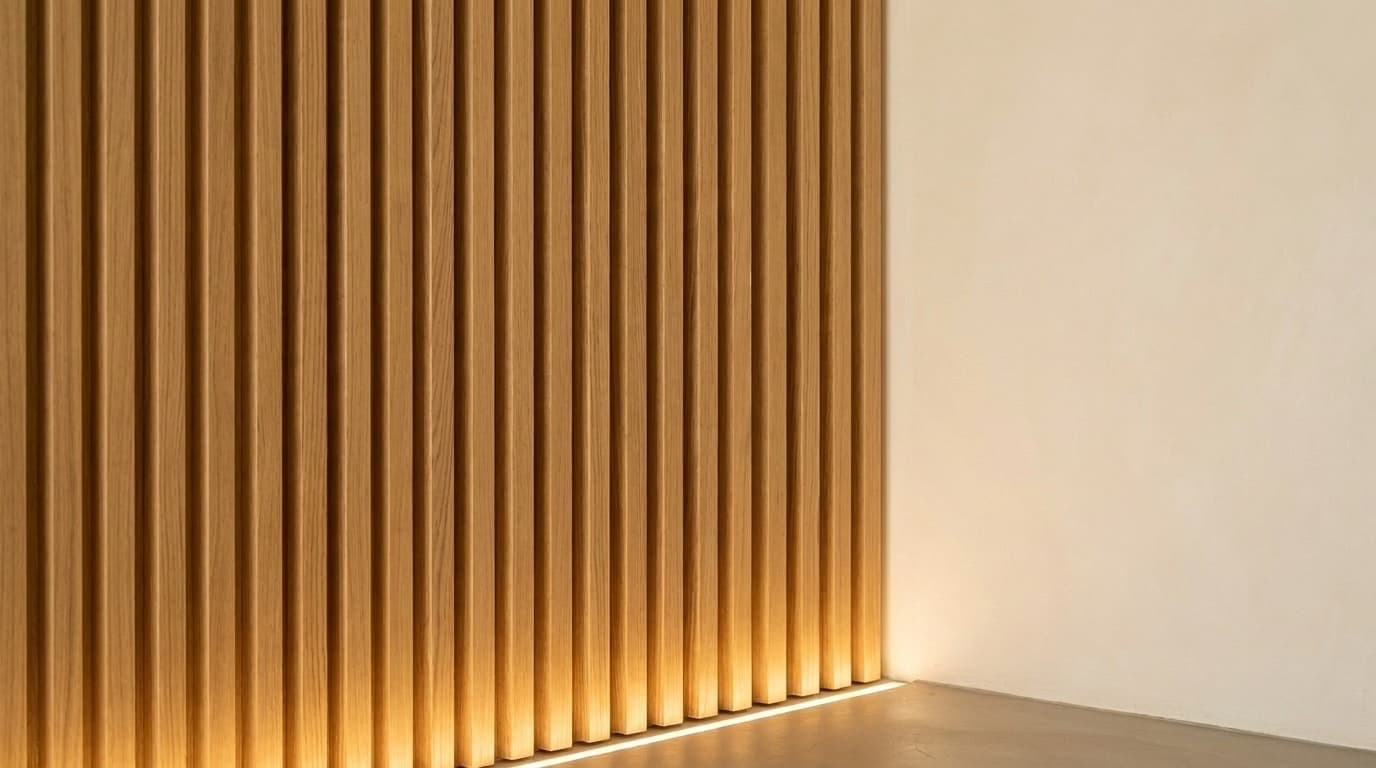
The client visited our Marbella showroom for a single 2-hour session and chose every material in person. The microcement was selected from three samples poured for the client on A4 boards — they chose Topciment Microbase + Microdeck in tone NCS S 3502-Y (warm pale grey) for its slight natural mottling. The oak slats came from our timber supplier in Mijas: they touched and smelled three veneer options and chose European oak in a natural matte oil finish, 40 mm wide with a 20 mm shadow gap. The wall plaster was a Morcemcal lime-based plaster in NCS S 0907-Y10R — a warm cream that reads almost white in daylight and golden in lamplight. No marble, no engineered stone, no high-gloss surfaces anywhere in the spec sheet.
Technical Specifications
Stripping Out & Substrate Preparation
The old beige floor tiles were lifted and the popcorn ceiling chiselled and sanded back to bare concrete soffit — both messy operations completed in week one with full dust protection on adjacent rooms. The wallpaper border was steam-stripped and the old paint scraped to expose the underlying gypsum plaster, which was sound enough to skim over rather than re-board. The concrete floor slab was diamond-ground to remove residual adhesive then levelled with a 4 mm self-levelling compound to create the perfect substrate for microcement — any irregularity would telegraph through the 3 mm finished microcement layer. All electrical points were repositioned at this stage: 8 new floor sockets routed in chases for the lounge and dining areas, and the ring-main pulled out and replaced with a dedicated 4 mm² circuit for the new lighting.
Technical Specifications
Microcement Floor & Oak Slat Wall
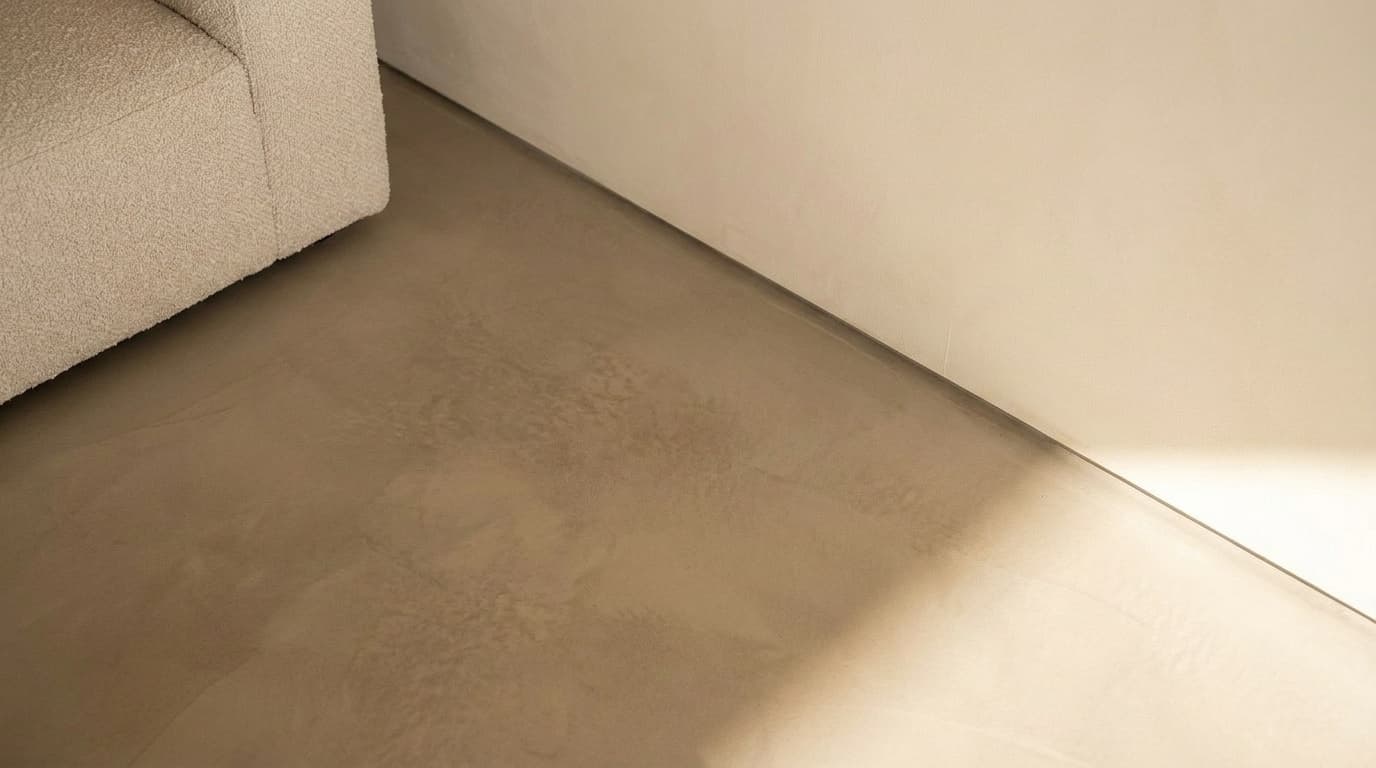
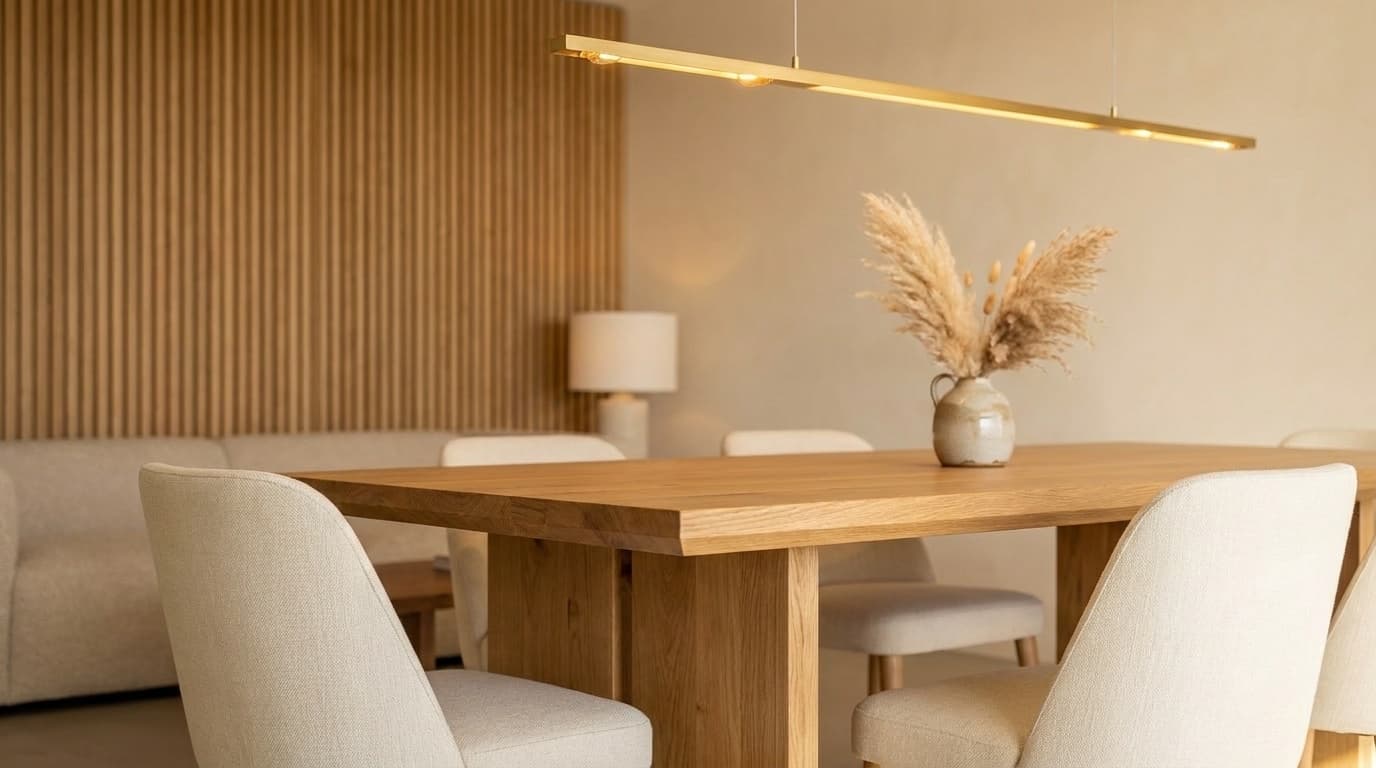
The microcement was applied by our specialist team in four staged layers over six days: primer, base coat with mesh reinforcement at slab joints, two thin Microdeck pigmented coats, then two coats of polyurethane sealer to give a soft matte sheen with no plastic look. The result is a perfectly continuous 65 m² floor with no movement joints (the underlying slab has none), and a tactile, slightly mottled surface that hides everyday marks. The oak slat feature wall was prefabricated in our workshop from 42 individual slats mounted on a 12 mm plywood backing panel painted matte black behind the slats — so the shadow gaps read as deep, intentional voids. The full wall was hung in two large panels and the joint hidden behind a slat. Wall-washing LED strip runs the full length at floor level, throwing warm 2700 K light up the slats and revealing the wood grain at night.
Technical Specifications
Lighting, Plaster & Final Furnishing
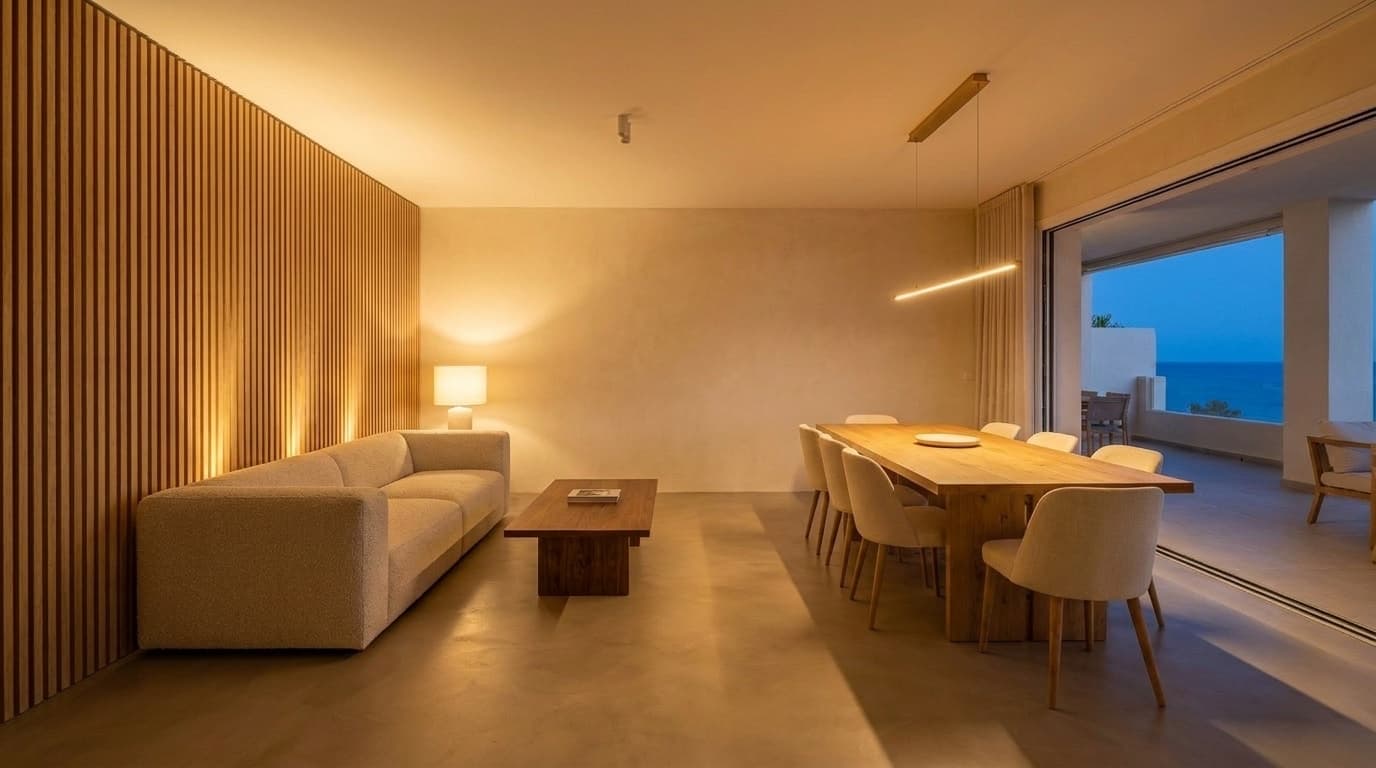
The walls received the lime-plaster finish in three coats over the prepared substrate — the final coat hand-trowelled to a soft matte texture with subtle tonal variation that catches afternoon light beautifully. No skirting boards were used: a 12 mm shadow-gap detail at the base of every wall keeps the look minimal and emphasises the continuous microcement floor. Lighting is layered: a dimmable recessed downlight grid (12 fittings on 3 circuits), a 2.4 m brushed brass linear pendant above the dining table, the LED wall-wash up the slats, and three table lamps in cream ceramic. The dining table is locally made solid oak with a chamfered edge; the boucle-linen sofa was sourced from a Spanish manufacturer and delivered after the microcement had fully cured (week 7). Final snagging at week 8 picked up a single hairline crack in the plaster above a doorway — repaired and re-painted within a day.
Technical Specifications
How We Work With You
Every Magnum Reformas project begins with a free site visit from a dedicated project manager — no obligation, within 48 hours of enquiry. We provide a fully itemised fixed-price quote: every line of work is listed, nothing is hidden. Once approved, our team manages every trade on site so you never coordinate subcontractors yourself. A dedicated WhatsApp group keeps you updated with photos and videos throughout. At handover, we walk you through every installation and leave you a full documentation pack.
Technical Specifications
Photo Gallery
Do you like this project?
We can create something similar — or completely unique — for your property on the Costa del Sol. Get a free, no-obligation quote within 48 hours.
Our Portfolio
More Projects You May Like
Other transformations from our portfolio with a similar scope, style or location.